
When it comes to organic chemistry, drawing the major organic product of a reaction can feel a bit like trying to solve a crossword puzzle, except the clues are often obscured by a haze of chemical jargon. Don’t fret, though. Understanding how to identify these products is not only essential but can also be incredibly satisfying, like finding that last missing puzzle piece. In this text, we’ll dive deep into the mechanisms, types, and driving forces behind organic reactions. By the end, you’ll feel confident enough to tackle even the most complex of organic reactions, all while keeping your sense of humor intact.
Understanding Organic Reactions
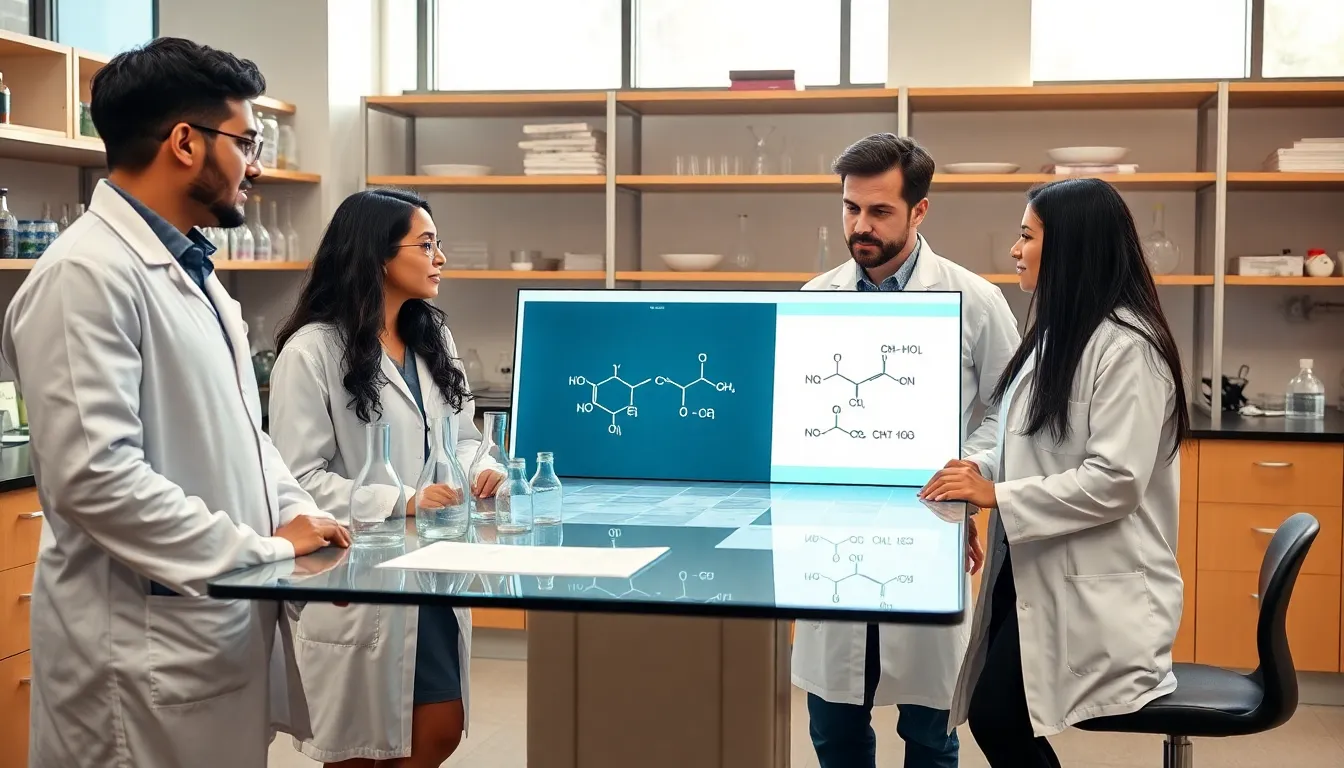
Organic reactions are the cornerstone of organic chemistry. They involve the transformation of reactants into products through breaking and forming chemical bonds. Understanding these reactions is crucial for predicting what products will emerge from a given reaction. At its most basic level, an organic reaction typically involves the movement of electrons, affecting the specific atoms and functional groups involved. Hence, mastering this subject means you need to grasp not only the vocabulary but also the underlying principles that govern these transformations.
Key Reaction Types
Organic reactions can be categorized into several key types. Some of the major categories include:
Addition Reactions
In these reactions, multiple reactants combine to form a single product. A classic example is the hydrogenation of alkenes, where hydrogen gas adds across double bonds.
Elimination Reactions
Here, a single reactant breaks down to form two products. This can be observed in dehydration reactions that remove water from alcohols.
Substitution Reactions
Substitution occurs when one atom or group is replaced by another in a compound. Nucleophilic substitutions in alkyl halides are common examples.
Rearrangement Reactions
In these reactions, the structure of a molecule is reorganized to form an isomeric product. Often, this involves shifting of atoms or groups leading to different molecular structures.
Factors Influencing Product Formation
Several factors play a role in the formation of organic products. Understanding these factors can help predict which products will emerge from a reaction.
Temperature and Pressure
Both temperature and pressure can alter the course of a reaction, influencing the stability of the intermediates formed during the process. Generally, increasing temperature speeds up reactions.
Concentration of Reactants
Higher concentrations of reactants can drive the reaction towards product formation according to Le Chatelier’s principle. So, it’s crucial for chemists to consider how the amounts of starting materials may affect outcomes.
Catalysts
Catalysts are substances that speed up reactions without being consumed. They provide an alternative pathway with a lower activation energy, facilitating product formation. For instance, enzymes act as catalysts in biological reactions.
Mechanistic Insights
Understanding the mechanism of an organic reaction provides invaluable clues about product formation. Mechanisms illustrate how and why reactants are transformed into products through a series of defined steps.
Common Examples and Applications
The principles of organic reactions not only serve academic purposes but also have real-world applications. In pharmaceuticals, many drug synthesis processes rely on organic reactions. Also, polymer chemistry utilizes addition and condensation reactions extensively to produce plastics.
Drug Development
Many modern medicines owe their existence to organic synthesis. For example, the process of synthesizing aspirin involves several reaction types, showcasing how interconnected chemistry can be.
Reviewing Reaction Conditions
Before venturing into characterizing the major organic product of a reaction, it’s prudent to review the specific conditions involved.

